The Twenty-Minute Rule: Why Britain Is Learning to Drink Its Coffee in Public
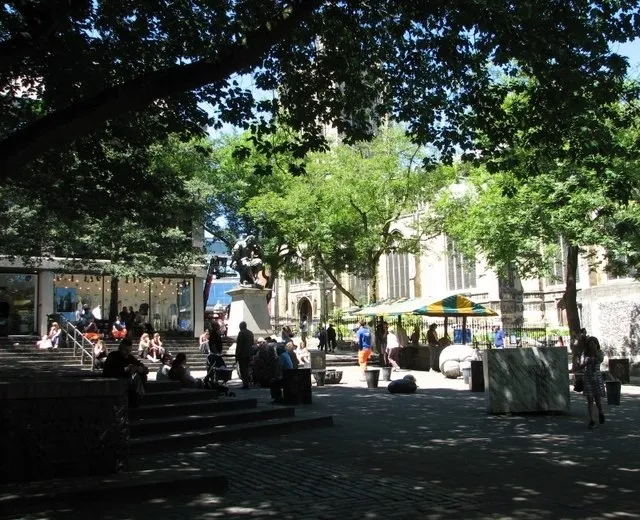
Photo: Evelyn Simak , CC BY-SA 2.0, via Wikimedia Commons
There is a particular sound a café makes when nobody is working in it. Not silence — never silence — but a low, shuffling hum of chairs, spoons against saucers, the hiss of the steam wand, someone laughing a bit too loudly at something on page four of the paper. It sounds, if you had to name it, like a Tuesday morning in a town that has decided not to be in a hurry.
That sound is becoming rarer and, in a pleasing contradiction, more sought after. Walk down any decent high street in the country right now and you will find at least one independent coffee shop that has quietly removed the plug sockets, covered the long communal desk with a sign asking for conversation, or simply stopped making takeaway cups after eleven o'clock. The message, delivered politely but firmly, is this: the coffee is still excellent. It is just no longer the point.
The seat is the product
For years the economy of the British coffee shop was built on the paper cup — fast, portable, gone. You paid for efficiency and you got it in a cardboard sleeve. What has changed is that a growing number of independents have worked out that the most valuable thing they sell is not caffeine but time, and that a window table facing a rainy street is a far better use of four square metres than a queue rail.
"We took out twelve seats and put in six," says Priya, who runs a small roastery café in Sheffield with her brother. "Takings dipped for a fortnight and then they came back up, because people started staying for a second cup and a slice of something. Now we have regulars who come in at the same time every day and we know exactly how they take it. That never happened when the whole place was a to-go counter."
The numbers make a certain kind of sense. A takeaway coffee is a transaction you complete once. A sit-in coffee is a transaction you complete again and again across a morning, and it arrives with something no app can deliver: the sense of being somewhere.
Laptop-free, not laptop-hostile
It would be easy to read the rise of the laptop-free café as a small act of aggression against remote workers. It mostly isn't. The cafés doing it well tend to be explicit and friendly about it — a card on the table, a chalkboard note, a member of staff who explains rather than enforces. Many keep a designated working corner, or quiet hours in the afternoon, so the freelancers are not simply exiled.
What they are pushing back against is not the laptop itself but the transformation of a room into a library with better lighting. When every table is occupied by one person and one screen, a café stops being a third place and becomes a co-working space that happens to sell oat lattes. The old regulars drift away. Conversation goes first, then the atmosphere, then the customers.
Set a boundary, though, and something loosens. People talk to each other. Solo visitors read actual books. A stranger asks to share the last table by the window and ends up recommending a dentist, a bakery and a walking route to a hill they have never heard of. This is not utopia. It is just a room with a bit of slack in it.
The economics of lingering
Behind the romance sits a hard commercial truth: rent is high, milk is expensive and margins on a single espresso are thinner than anyone outside the trade would like to believe. The sit-in model only works if lingering pays, which means the menu has to give people a reason to stay for a second round — a proper cake, a decent sourdough toastie, a jug of water that nobody has to ask for.
The best operators have turned this into an advantage. A short menu, done well, at a price that feels fair for what is essentially a twenty-minute holiday. You are not paying £4 for coffee. You are paying £4 for a warm room, a clean mug, a view of the high street and permission to do absolutely nothing for a while. Framed that way, it starts to look like one of the better-value luxuries on offer in Britain in 2026.
That is not a small thing. The squeeze on spare time has been well documented, and every casual plan that once filled a weekday evening now competes with a sofa and a screen. The morning coffee is one of the few social rituals left that requires no booking, no outfit, no particular mood and no specific reason. It is the most low-stakes way there is of being around other people.
The neighbourhood keeps the receipt
There is a wider effect, too. A café that expects you to stay becomes a place that expects to know you. The noticeboard fills up with yoga classes, lost cats and guitar lessons. Someone starts a running club from the door. The staff learn that the man in the blue coat always has the soup on Thursdays and that the family with the pram needs the corner table with room to park it.
None of this is nostalgia for a golden age of milkmen and landlines. Most of the cafés making this shift are young businesses with modern ideas, often run by people who could have built a delivery-only brand and chose a room instead. They are betting that Britons have grown tired of the vanish-and-run model of consumption — that we want somewhere to go, not just something to get.
Sit for twenty minutes in a good one and it is hard to argue. The rain runs down the glass, the spoon clinks, the second flat white arrives without being asked for, and the phone stays in the pocket. You have not been productive. You have not been optimised. You have simply been out in the world, and the world, briefly, has been glad of it.