The Handwritten Week: Why Britain’s Calmer Planners Are Putting Down Their Phones
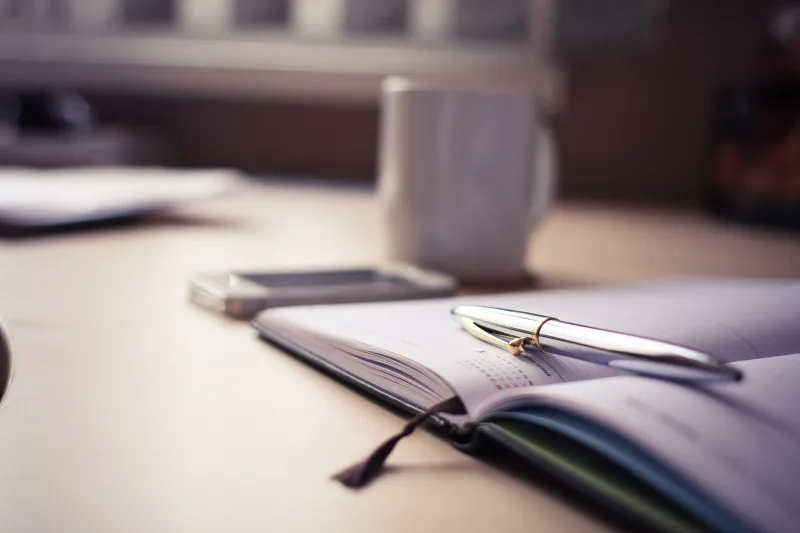
On a grey Tuesday in November, the queue at a small stationer’s in south London is not for birthday cards. It is for notebooks. Specifically, it is for a mid-weight, dotted-paper notebook that sits somewhere between a diary and a blank canvas — the kind of object that has become, in 2026, a small but telling marker of how Britain wants to live.
The people buying it are not Luddites. Most have calendars on their phones, Slack threads on their laptops and at least one group chat that has gone rogue. What they are after is a quieter layer underneath all that: a paper diary, a handwritten list, a page that does not ping. Analogue planning has become less about rejecting technology than about drawing a boundary around it.
The quiet pull of a blank page
There is a reason stationery shops have become destinations again. Browsing a wall of pens, flipping through paper stocks and testing whether a notebook lies flat is a slow, sensory pleasure in a world of one-click checkout. Independent stationers report a steady appetite for planners, refills and good pencils — not just as gifts, but as everyday tools. The purchase is part of the ritual: choosing the book, breaking it in, deciding what kind of week it will hold.
This is not the stationery aisle of the school year, with its plastic wallets and fluorescent highlighters. The 2026 version is more considered. It is a linen-bound diary, a slim week-to-view planner, a pocket notebook for the thoughts that arrive on the bus. It is paper as a form of self-respect — a way of saying that your Tuesday deserves a proper page.
A shop built for browsing
The revival has been good for the independents. Since Paperchase disappeared from UK high streets in 2023, the stationery market has become more fragmented and, in some ways, more interesting. Small shops have filled the gap with curated ranges, repair services and a level of knowledge you do not get from a shelf stacker. You can talk about paper weight, ink bleed and binding without feeling like you have wandered into a specialist hobby.
The shops themselves have changed too. Many now run letter-writing evenings, journaling workshops and low-key planning sessions where people bring their diaries and simply sit together. It is not quite a club. It is more like a shared pause. And for a generation that has been told to optimise every hour, the chance to spend twenty minutes choosing a pen is its own small rebellion.
Ritual beats recall
Productivity experts tend to agree on one thing: the problem is rarely the tool. The problem is the endless switching between tools. A paper diary works because it is single-purpose. It does not notify you. It does not suggest a shortcut. It asks you to sit still, open it and decide what matters.
That physical act slows the brain down in a useful way. Writing a task by hand takes longer than typing it, which forces a kind of editing. You cannot copy and paste a to-do list into a paper diary. You have to choose what earns the space. For people who feel buried by digital lists, that constraint is a relief.
There is also the matter of recall. Many planners say they remember appointments better when they have written them down — not because handwriting is magic, but because the act of writing creates a pause. You look at the page. You picture the day. You commit. A phone calendar can do the same thing, of course, but only if you stop long enough to look at it properly.
The focus economy
Analogue planning is also a reaction to the attention economy. In 2026, focus has become a luxury good. Quiet desks are marketed as premium. Apps sell us silence. A paper planner is a cheaper version of the same promise: a small, closed world where nothing else is happening.
That is why the planners people are buying now are often deliberately plain. They have space for a few priorities, not forty. They have a week-to-view spread rather than a colour-coded matrix. The appeal is not minimalism for its own sake. It is the feeling of a day that has edges.
One productivity consultant I spoke to describes it as a form of ‘gentle accountability’. You write it down, you see it, you do not have to remember it. The page holds the plan so your head can hold the work. It is a simple idea, but it explains why so many people are returning to paper after years of digital trial and error.
Start with one page, not a system
The mistake, as with any revival, is turning it into a project. You do not need a leather-bound planner, a set of archival pens and a colour-coding system to begin. You need a notebook and a pencil. Write tomorrow’s three most important things. Draw a line under the day. Close the book.
The pleasure comes later — in the small accumulation of pages, the crossed-out tasks, the notes that would otherwise have vanished. A well-kept notebook is not a museum piece. It is a working object, slightly scuffed, with a coffee ring on the corner and a week that made sense at the time.
In 2026, the handwritten week is not about going backwards. It is about adding a slower, more tactile layer to a life that is already full. The phone can stay in the bag. The page is open. That is enough.